%20copy_edited_edited.png)
%20copy.png)

RICHARD BANTiGUE

Meet Peanut
ピーナッツに会う: A Digital Reawakening
Meet Peanut, a ceramic dog from Meiji-era Japan, brought back to life through Photogrammetry and Unreal Engine. In Collaboration with Crow Museum of Asian Art of The University of Texas at Dallas
Meet Peanut
ピーナッツに会う: A Digital Reawakening
Meet Peanut, a ceramic dog from Meiji-era Japan, brought back to life through Photogrammetry and Unreal Engine. In Collaboration with Crow Museum of Asian Art of The University of Texas at Dallas
Meet Peanut
ピーナッツに会う: A Digital Reawakening
Meet Peanut, a ceramic dog from Meiji-era Japan, brought back to life through Photogrammetry and Unreal Engine. In Collaboration with Crow Museum of Asian Art of The University of Texas at Dallas

Meet Peanut is a proud collaboration between UTD MFA Animation and the Crow Museum of Asian Art of The University of Texas at Dallas


Meet Peanut is a proud collaboration between UTD MFA Animation and the Crow Museum of Asian Art of The University of Texas at Dallas
My Role
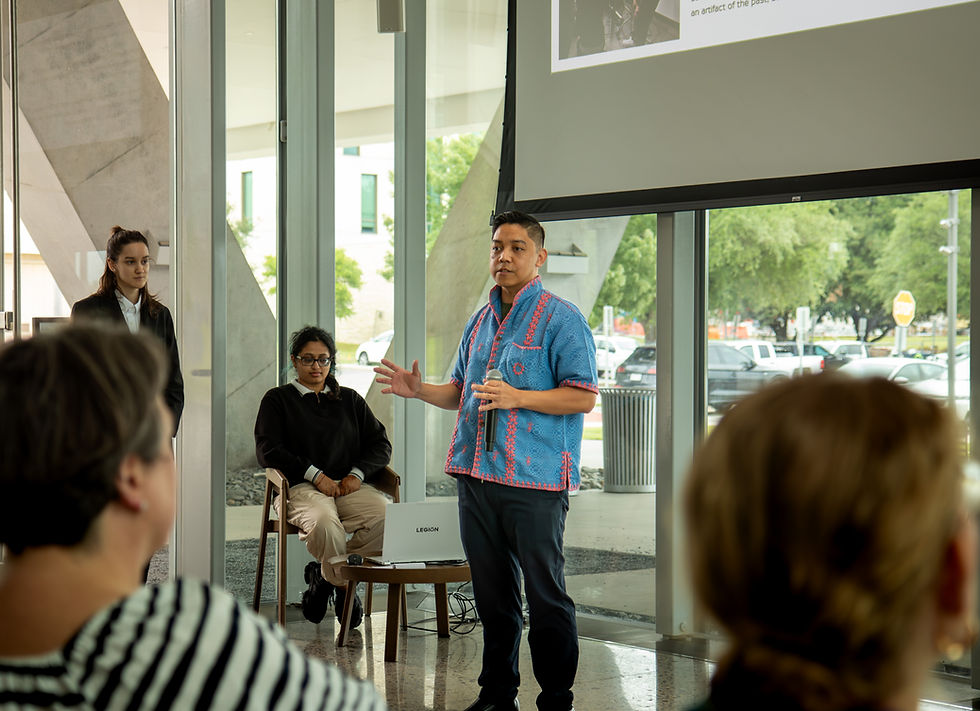
As the project’s Technical Director, I played a major role in shaping both the creative and technical direction of the production. My contributions extended beyond pipeline development and technical problem-solving into research, visual development, creative direction, and client-facing presentations. Throughout the project, I collaborated closely with the team to help translate research and conceptual ideas into a cohesive cinematic experience while also communicating progress, vision, and deliverables directly to clients and collaborators.
Below are my primary contributions to the project.

Water Simulation
Animation
Texturing


Photogrammetry
Environment
3D Modeling


VFX
MetaHuman
Rigging


Photogrammetry
My photogrammetry workflow begins by capturing both cross-polarized and parallel-polarized RAW photographs to accurately preserve surface detail, texture, and material information while minimizing unwanted reflections.

Reconstruction
We took pictures of Peanut from every angle, carefully documenting its form. Making sure to turn it over guaranteeing no part of its shape was lost.
The separate image datasets are then processed and combined inside RealityScan to generate a high-fidelity 3D mesh reconstruction with improved texture accuracy and surface definition.
Textures
In the final step, textures were drawn from the captured light itself, restoring the surface with remarkable fidelity. Through this process, Peanut exists not only as an artifact of the past, but as a living digital presence.


Look Dev
Through the look development and optimization process, I reduced the original master mesh from 13.5 million triangles down to approximately 25,000 triangles while preserving nearly identical visual fidelity and retaining the vast majority of the surface detail.
This workflow focused on achieving a highly efficient real-time asset without sacrificing the texture quality, silhouette accuracy, or intricate material characteristics captured during the high-resolution scan process.


Environment
We aimed to create an environment grounded in everyday Meiji-era life, with a modest garden reflecting the quiet simplicity of a common household and a bustling marketplace where an object like Peanut could realistically be sold and encountered by ordinary people.


Marketplace


Workshop


Japanese Garden
FVX
My VFX contributions focused on bringing subtle life and atmosphere into the world of Peanut through water simulations, drifting leaf particles, firefly effects, and layered marketplace dust, all designed to make the environments feel immersive, lived-in, and emotionally grounded.


Underlayers
For shots 4 and 5, I rendered the scene in four separate layers to streamline the compositing process in Adobe After Effects, allowing us to create the effect of the painter actively painting onto the ceramic dog, Peanut.


Water Simulation
I created the water simulation to bring a sense of calm movement and realism into the environment, helping the world around Peanut feel more immersive and alive.
Achieving the effect required extensive trial and error inside Unreal Engine, especially when attaching the Niagara water system to the bamboo fountain and timing it correctly within the Level Sequencer. Early versions had issues with positioning, activation timing, and believable flow behavior, but through repeated testing, socket adjustments, and refining the particle behavior, I was able to create a more natural and cinematic water simulation that integrated seamlessly into the scene.


Historical Authenticity
To ensure historical authenticity, I conducted in-depth research into traditional Japanese water features used during the Meiji era, which led me to the shishi-odoshi.
This bamboo fountain is gravity-fed from a higher water source, where water slowly fills a pivoting bamboo tube that tips over once full, creating a rhythmic clack as it resets.
Beyond its functional design, the shishi-odoshi was traditionally used in Japanese gardens to deter animals and, symbolically, to ward off bad spirits through its repetitive sound. Understanding both its mechanical simplicity and cultural significance helped inform how I recreated and integrated it into the environment, ensuring it felt historically grounded while also supporting the atmosphere of the scene.

Modeling and Texturing
To maintain visual consistency with our Meiji-era setting, several assets had to be created from scratch rather than relying on existing libraries.
Many available models did not match the specific style, materials, or everyday objects appropriate for the period, so custom assets were necessary to ensure authenticity.
This approach also allowed us to tailor each element—such as props, structures, and environmental details—to better support the narrative and the intended scale of the world, making the environment feel cohesive, purposeful, and grounded in its historical context.

Modeling and Texturing
To maintain visual consistency with our Meiji-era setting, several assets had to be created from scratch rather than relying on existing libraries.
Many available models did not match the specific style, materials, or everyday objects appropriate for the period, so custom assets were necessary to ensure authenticity.
This approach also allowed us to tailor each element—such as props, structures, and environmental details—to better support the narrative and the intended scale of the world, making the environment feel cohesive, purposeful, and grounded in its historical context.


Rigging
Rigging and skin weighting were essential for creating the paintbrush animation for Peanut, as they allowed the brush and any connected elements to move naturally and maintain proper deformation during interaction.
By setting up a clean rig and carefully adjusting the skin weights, I was able to ensure smooth, controlled motion without visual artifacts or unnatural bending. This setup was necessary to support the illusion of the painter interacting directly with Peanut, making the brush movement feel intentional, precise, and believable within the scene.

Forward Solve (Controls → Bones)
I used Forward Solve within the Control Rig system to drive movement through IK and FK controls connected directly to the skeletal hierarchy.
This allowed me to pose, animate, and refine performances using animator-friendly controls while the rig dynamically translated those movements onto the skeleton inside Sequencer and the Control Rig Editor.
Backward Solve (Bones → Controls)
I also utilized Backward Solve workflows to convert existing skeletal animation data back onto the rig controls for further editing and refinement.
This process was especially useful when working with imported animation and motion capture data, allowing the controls to automatically match the movement of the animated bones. By integrating Backward Solve into the Rig Graph, I was able to perform non-destructive animation cleanup, timing adjustments, and cinematic refinements directly within a real-time workflow.


Animation
I also contributed to several key shots across the project, including Shot 1 and Shot 2 featuring the shishi-odoshi, Shot 3 focusing on the painter, Shot 4 highlighting the paintbrush interaction, and Shot 7 showcasing the MetaHumans within the marketplace. Each of these shots required a combination of environment work, VFX integration, and careful sequencing to support the overall narrative and maintain visual continuity throughout the film.


MetaHuman
One of my proudest contributions to the project was the implementation and development of the MetaHuman characters.
Integrating MetaHumans into the pipeline helped ground the project in a stronger sense of realism through more details, proportions, and cinematic presence.
Their level of visual fidelity allowed the performances and environments to feel more immersive and emotionally convincing, helping bridge the gap between stylized storytelling and realistic digital cinematography.


Concept_01
The first character concept explored the historical role of male artisans crafting ceramic pieces like Peanut, based on our research into Meiji-era production practices. While historically accurate, we ultimately moved away from this direction because it focused more on fabrication than storytelling.
Instead, we chose a painter character, which better supported the project’s intimate and narrative-driven atmosphere.

Concept_02
Character 2 explored the idea of a female painter, inspired by research showing women often handled the decorative painting of ceramics during the Meiji era.
Rather than focusing on a specific identity, we kept the character abstract through a silhouetted form to emphasize atmosphere, gesture, and the artistic process itself.
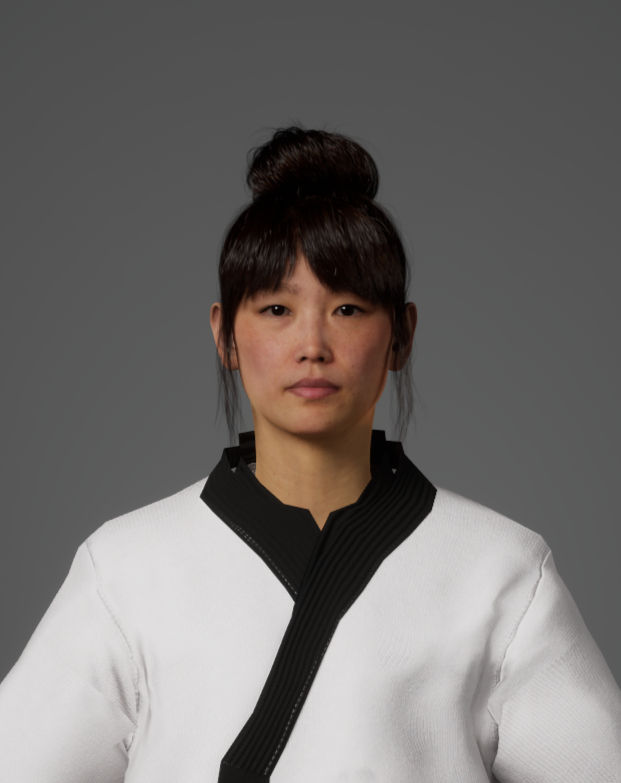
Final
Character 3 became our final direction, using a simplified silhouetted painter with minimal facial detail.
This approach emphasized anonymity and universality, allowing the character to function more as a symbolic presence that supported the project’s atmosphere and storytelling rather than a specifically defined individual.
To learn more about MetaHumans, please visit The MetaHuman Project
Go behind the scenes of *Meet Peanut*, a cinematic digital reawakening of a Meiji-era ceramic dog created through photogrammetry, Unreal Engine, historical research, VFX, and real-time storytelling. In this process breakdown, we walk through our contributions to the project and explore the full production pipeline, including photogrammetry, environment design, MetaHuman integration, water simulation, rigging, VFX, lighting challenges, and cinematic sequencing.
Software Used:
• Unreal Engine
• RealityScan
• Adobe After Effects
• Blender
Topics Covered:
• Photogrammetry Workflow
• Environment Design
• MetaHumans & Parametric Clothing
• Niagara Water Simulation
• Rigging & Animation
• VFX & Compositing
• Historical Research & Authenticity
• Cinematic Storytelling in Real-Time
Thank you for watching and supporting the project.
Go behind the scenes of *Meet Peanut*, a cinematic digital reawakening of a Meiji-era ceramic dog created through photogrammetry, Unreal Engine, historical research, VFX, and real-time storytelling. In this process breakdown, we walk through our contributions to the project and explore the full production pipeline, including photogrammetry, environment design, MetaHuman integration, water simulation, rigging, VFX, lighting challenges, and cinematic sequencing.
Software Used:
• Unreal Engine
• RealityScan
• Adobe After Effects
• Blender
Topics Covered:
• Photogrammetry Workflow
• Environment Design
• MetaHumans & Parametric Clothing
• Niagara Water Simulation
• Rigging & Animation
• VFX & Compositing
• Historical Research & Authenticity
• Cinematic Storytelling in Real-Time
Thank you for watching and supporting the project.

Meet Peanut is a proud collaboration between UTD MFA Animation and the Crow Museum of Asian Art of The University of Texas at Dallas

Photogrammetry
We took pictures of Peanut from every angle, carefully documenting its form. Making sure to turn it over guaranteeing no part of its shape was lost.
These images were brought together in RealityScan, where they aligned and formed a three-dimensional reconstruction. The top and bottom scans merged into a complete figure.
In the final step, textures were drawn from the captured light itself, restoring the surface with remarkable fidelity. Through this process, Peanut exists not only as an artifact of the past, but as a living digital presence.


We circled Peanut from every angle, carefully documenting its form. Then, I turned it over to capture what time had hidden from view, ensuring no part of its shape was lost.